
Ready for the inside scoop on Giuseppe Verdi and Falstaff?
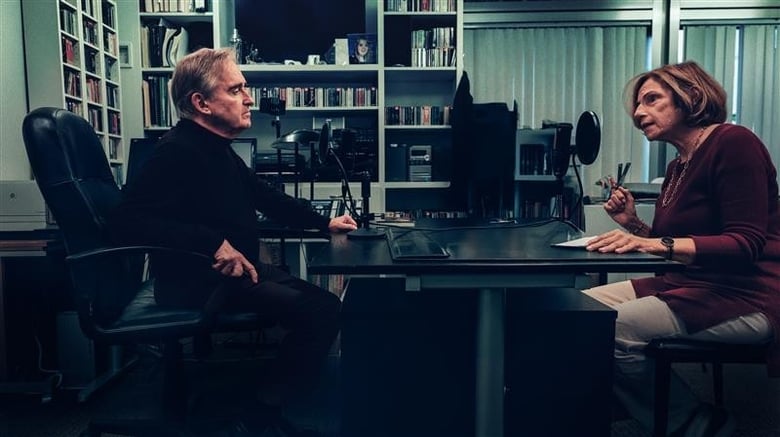
On LA Opera’s Behind the Curtain podcast, we explore the charismatic creatives, gripping stories, and sublime music that make us fall in love with opera. In this excerpt from a recent episode, Music Director James Conlon sits down with broadcast journalist Gail Eichenthal (pictured above) to share why he “can’t live without Verdi” and believes the composer’s final opera, Falstaff, is essential viewing for any Verdi fan.
Gail Eichenthal: Hello, and welcome to 20 Years with Maestro Conlon, a miniseries with James Conlon, commemorating this, his culminating season as music director at LA Opera, after which he becomes Conductor Laureate.
Today, we'll discuss Verdi's last great masterpiece for the stage, Falstaff. There could hardly be a richer topic to talk about your legacy at LA Opera than Italian opera and Giuseppe Verdi, and it goes way back to your first season.
James Conlon: Well, my first weekend was very Verdian here in LA Opera. La Traviata, I think, on Friday and Don Carlo on Saturday. That was a great way to start. Verdi goes back to the beginning of my awareness of my love for classical music, period. It all started when I saw a performance of La Traviata. That set it all in motion. I feel I can't live without Verdi. I can’t conceive of classical music without thinking of Verdi.
GE: And, if I understand this right, you've done more than 500 performances of Verdi worldwide?
JC: Yes, that's right. I passed that in 2019. So that's much closer to, I don't know, 550 now. Many of those performances have been here at LA Opera.
GE: So, if you can sort of sum it up, what drives your passion for Verdi?
JC: I keep coming back to the human being, because Verdi's life and personality attracts and interests me. Now, you can read all about how Verdi was irascible and difficult, and he probably was. But I also believe that there was something deeply human about Verdi, and part of that was, I think, the origins of his life and his birth. He was born into a poor house in the little town of Busseto, Italy. I've visited it several times, and I had one very dramatic experience, which was in January.
I remember getting lost in the mist because it was so thick that you could not see two feet in front of you. And this so profoundly affected me because, you know, we all have this sort of cliché vision of Italy, all sunshine, palm trees in the south. We forget that the north of Italy is cold, dark, covered with fog and mist in winter. Verdi was born into that and I think this deeply informed his humanity. This is a man who always kept his connection to the earth. He never lost that.
GE: Amazing. We're about to be treated to Verdi's final operatic masterpiece. Tell us what drew you to programming Falstaff toward the end of your final season as Music Director here at LA Opera.
JC: Well, it's no accident that I chose Falstaff, which is Verdi's last work, and The Magic Flute, which is Mozart's last work. And for our gala concert on April 24, we're doing big excerpts of Mozart, Verdi, and Wagner, because I think those are the three pillars—or should be the three pillars—of any opera house, and three that I have tried to defend in my years here at LA Opera. This is my expression of "goodbye" or "farewell," programming and conducting those final works.
Falstaff is definitely an autumnal work. Verdi was 80 when he wrote it. He wrote it because he had an inner need to prove to himself, probably, that he could write a comedy successfully, because he had only written one and it was not a success. And that always bothered him. Of course, he always loved Shakespeare, so he turned The Merry Wives of Windsor into something better than the play, turning it into one of the most perfect operas, a masterpiece.
GE: It's just brimming with humor and joy, and anyone can pick up on that. You don't have to speak the language. It's just full of delight.
JC: Well, it goes by at the speed of light. Amazingly witty and also an ironic work where he chooses self-citation. He almost takes quotes or similarities with operas that he's written to satirize himself and to say, "Well, this is what I used to do in melodramas. Here it is now in a comic context."
So, it's a self-referential work and as such, for anybody who loves the rest of Verdi, it's essential.
* * *
This is just a glimpse of James Conlon’s conversation with Gail Eichenthal. To hear more—including how the famous "Va, pensiero" chorus from Verdi's Nabucco became a near-national anthem for Italy and the tale of a 12-year-old James Conlon's professional choral debut in La Bohème—click here to listen to the full episode of Behind the Curtain, “20 Years with Maestro Conlon: Italian Opera.” You can explore the complete 20 Years with Maestro Conlon mini-series on LA Opera's Behind the Curtain, available wherever you listen to podcasts.
Join Maestro Conlon as he conducts his final Community Opera as Music Director! Noah's Flood returns to the Cathedral of Our Lady of the Angels on Friday, May 8, and Saturday, May 9. Reserve free tickets for the whole family at LAOpera.org/Noah.
Hear directly from Maestro Conlon on Mozart's The Magic Flute at Exploring Opera, LA Opera Connects' free online learning series for adults. Register now for Exploring Opera: The Magic Flute on May 16 at LAOpera.org/ExploringOpera.
